
How Charlottesville Residents Find Records
No single office in Charlottesville keeps a full household roll. Start with whatever detail anchors the question. An exact address fits the City GIS Viewer and the assessor's parcel file. An owner name can lead from parcel to deed. Voters checking their own registration belong in Virginia's secure voter portal. Family history works differently. A dated city directory, a newspaper notice, a cemetery lead, or a probate file often starts that trail better than any current list, because an owner, a voter, and an occupant are not interchangeable categories.
Common names need a second detail. A middle initial, a spouse, an occupation, or a historic address can separate people who look alike. A deed description works too. Visible birth years help where a record allows them. A missing record is not always a missing person. The trail may sit behind an old street name, an Albemarle parcel carrying a Charlottesville mailing address, a protected address, or a collection that still lives on a shelf rather than online.
- Check the City GIS Viewer with one broad address, street, or owner field. Record the parcel ID, situs address, deed reference, and owner label.
- Confirm whether the parcel is in Charlottesville City, Albemarle County, or an exceptional University of Virginia area before choosing a clerk or registrar.
- Use the Charlottesville Circuit Court Clerk's land index for transfer parties and legal descriptions, then move back through grantors and grantees.
- For an earlier household, compare the nearest city-directory editions with census, obituary, land-book, and newspaper evidence.
- When a nonexempt city record is not online, send a specific request to the responsible office through the Virginia Freedom of Information Act process.
Charlottesville Resident Records Offices
Three Charlottesville offices anchor the official trail. The Circuit Court Clerk keeps city land records, with probate and court material sitting alongside them. The City Assessor links each parcel to deed and plat references, ownership history, and improvements. The Registrar handles election records. The Registrar can also explain the narrow statutory route to a public voter list. None keeps a complete current-resident roll. For a named street, the Charlottesville street directory route follows the address and parcel chain in more detail.
Charlottesville Circuit Court Clerk
315 East High Street
Charlottesville, VA 22902
(434) 970-3766
Charlottesville City Assessor
102 5th Street NE
Charlottesville, VA 22902
(434) 970-3136
Charlottesville Voter Registration
120 7th Street NE, Room 142
Charlottesville, VA 22902
(434) 970-3250
Virginia Citizen Portal for secure self-service status checks
Charlottesville Records Need a Boundary Check
Charlottesville became an independent city in 1888. Albemarle County surrounds it completely. The two localities keep separate clerks, assessors, courts, and registrars, so a Charlottesville mailing address alone cannot pick the right records office. City parcels answer to City GIS. They answer to the Charlottesville Circuit Court Clerk as well, while Albemarle's offices hold county parcels even when the postal line reads Charlottesville. The 1963 annexation complicates older records. A spot in Johnson Village, Greenbrier, or Barracks Road can surface in county-era material before later city assessment rolls.
University of Virginia land adds a charter-boundary exception. Confirm the parcel geometry and locality before treating a no-result as final, because legal location, postal city, ZIP code, and mailing address each answer a different question.
Charlottesville Parcel Records by Address
The City GIS Viewer anchors a current-address search. Its documented fields run wide. Full address, owner's name, street number, street name, zoning, parcel ID, sale date, and sale price all appear. Start with one broad field before narrowing anything. The system combines every entered field. A result can then tie the parcel to its situs address, recorded owner label, sale context, assessment data, and deed or plat reference.
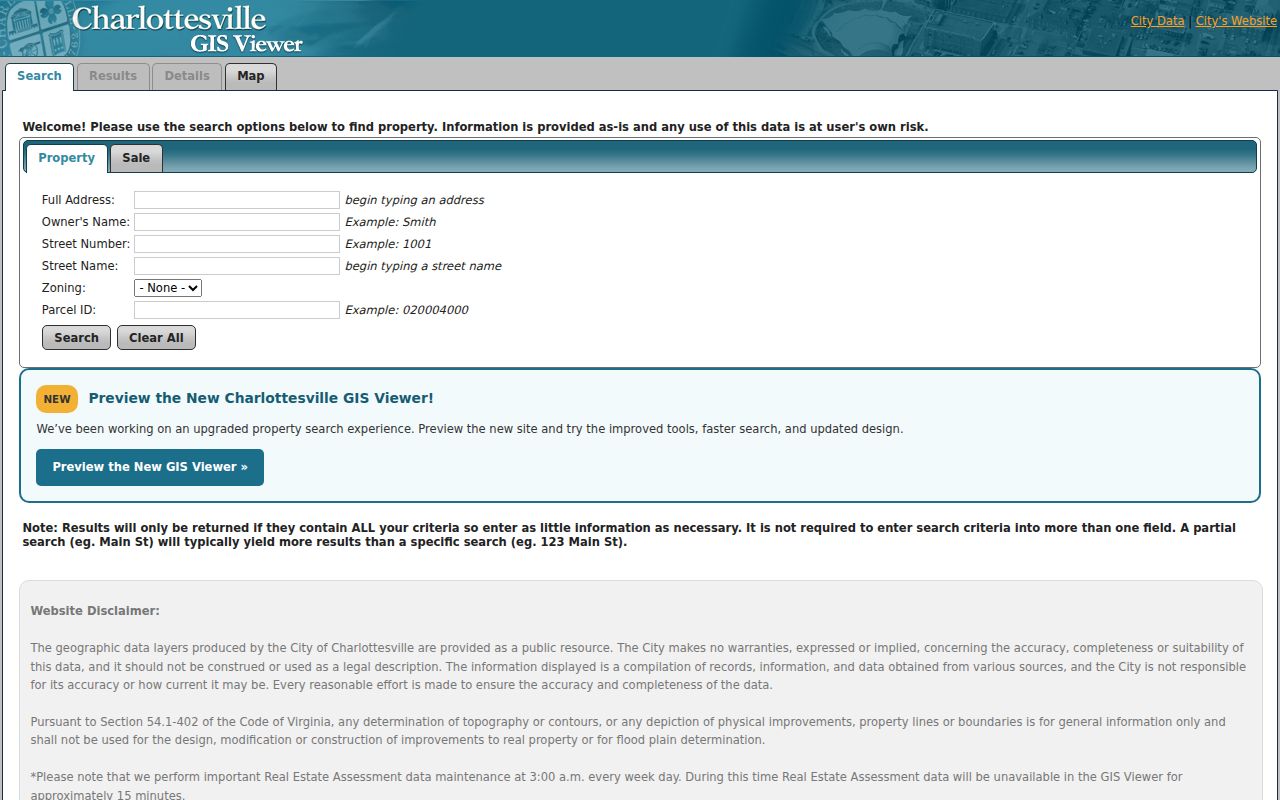
The viewer is a parcel and assessment tool. It is not a legal description. Nor does it list everyone at an address, so the assessor's hard-copy parcel histories remain the offline follow-up when a map view lacks the needed history.
| GIS field | Useful Charlottesville check |
|---|---|
| Full Address or Street Name | Find a parcel or browse a broader street result. |
| Owner's Name | Locate a recorded ownership clue, including partial-name searches. |
| Parcel ID | Connect the map result to land books and clerk references. |
| Sale Date or Price | Limit a property search by recorded sale context. |
| Layers and Identify | Compare parcels with ZIP, precinct, neighborhood, and city-limit context. |
Charlottesville Permit and Cemetery Searches
The City of Charlottesville's public search hub gathers building-permit status, cemetery plot, and real-estate assessment tools in one place. Treat these as focused leads. A permit can record a project, an inspection, or a listed applicant where public. It cannot prove anyone lived there. Cemetery results support a death or burial lead. Confirm those through an obituary, a vital index, or the cemetery office before leaning on them.
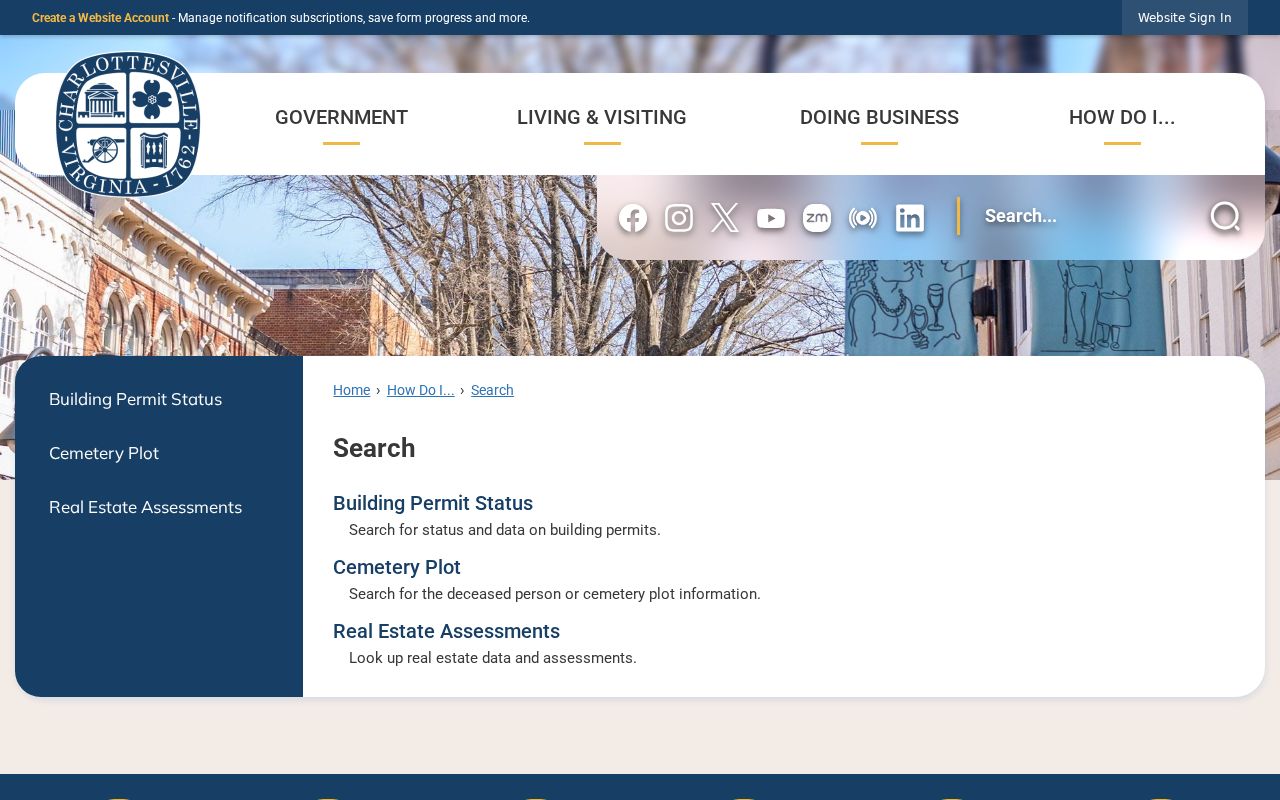
The hub simply makes separate functions visible. For older permit material or a missing public result, try the City Public Permit Portal first, then make a specific request to the city custodian if the record is nonexempt.
The City's Apps landing page also points to the cemetery-search service. Cemetery lookup is one tap from there.
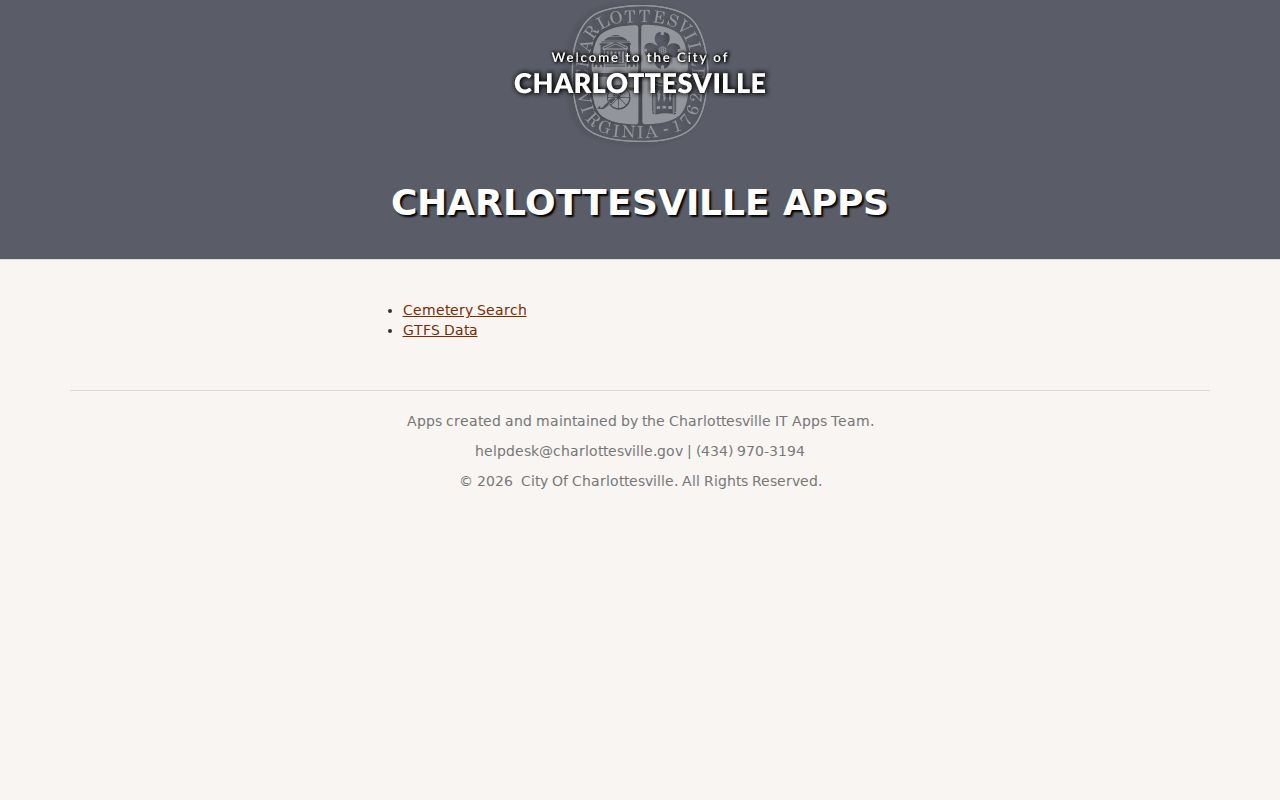
Treat a cemetery hit as a lead. Check it against a death index, an obituary, or the cemetery office before drawing any family conclusion.
Charlottesville Deeds Link Names to Parcels
A recorded deed follows the property, not the street number. Start with the current owner from the GIS result. Search that person as a grantee in the clerk's land index. Then run the seller as the next grantee. Grantor means seller. Grantee means buyer. When a street was renamed, renumbered, or split into parcels, the legal description, lot, plat, or prior-instrument reference is the durable bridge between records.
Virginia Secure Remote Access explains that free index-only searching works where a clerk enables it, with image access following local subscriber rules. Charlottesville's page points to US Land Records pay-per-view. The fallback chain still stands. It runs from the clerk counter to local books to Library of Virginia microfilm, since the public local page states no citywide online cutoff.
- Parcel
- A mapped property unit with an identifying number in the assessor system.
- Index
- A finding tool that identifies a record; it is not always the record image.
- Criss-cross directory
- A historic directory arranged by address so an old household can be located by street number.
- Legal description
- The lot, subdivision, or boundary wording that identifies land in a deed.
Remote access rules offer a useful lesson. Keep the searchable index and the clerk's official record separate. Before moving to the preceding transfer, note the book, page, instrument number, and legal description.
Current Charlottesville Resident Directories
A current Charlottesville residents directory, in practice, is several separate official indexes. It is not one single list. The GIS and annual land books are the owner and parcel sources. Deed indexes name the parties to recorded transfers. The secure voter portal serves a registered voter's own account. A statutory voter list follows different rules through election officials. Court indexes, licenses, and public notices can help test a name. None of them should be read as a current household list.
| Source | Who It Lists | Keeper | Access |
|---|---|---|---|
| City GIS and land books | Recorded owners and parcels | City Assessor and Circuit Clerk | GIS free; unofficial land-book PDFs 2015–2026 |
| Recorded land index | Grantors, grantees, liens and legal descriptions | Charlottesville Circuit Court Clerk | SRA rules vary; counter and pay-per-view paths |
| Voter registration records | Statutory registration fields, with exclusions | City Registrar and Virginia Elections | Secure self-check plus public-inspection rules |
| Court case index | Parties, case numbers, dates and disposition | Virginia courts and local clerks | Scope varies; protected cases stay closed |
| Historic city directories | Dated name and address clues | JMRL, UVA, ACHS, LVA and NARA | PDF, microfilm, library, and archive access |
Match the record to the question. Use a parcel or deed for ownership. Use a court or vital index only for the event it records. For one person rather than a location, a Charlottesville resident lookup keeps those records distinct and checks a name against independent details.
Charlottesville Voter Records Have Narrow Uses
The Virginia Citizen Portal lets an individual securely check their own registration, polling place, districts, absentee status, and voting history. It asks for name, date of birth, last four Social Security digits, locality, and an attestation. It is not an online method for listing a whole street. Select Charlottesville City, not Albemarle County, when checking a city registration.
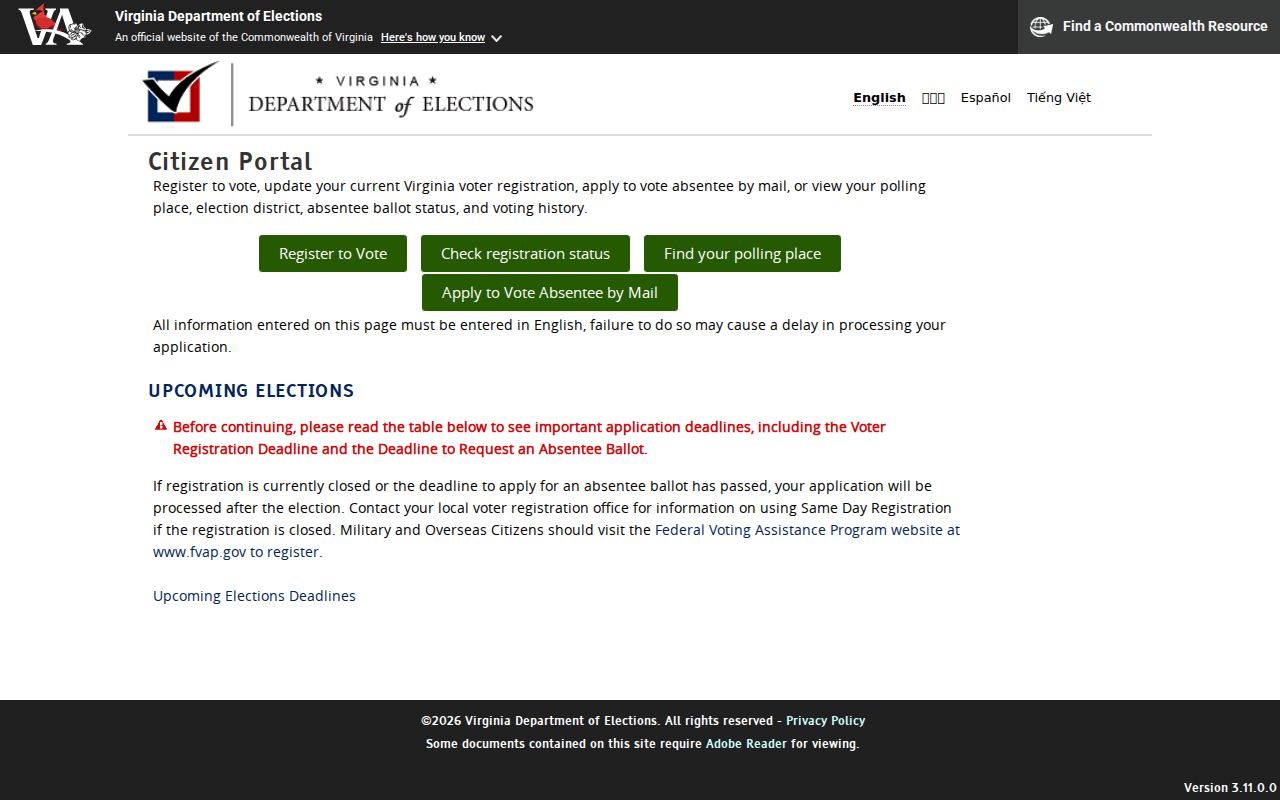
Virginia's public registration-list rules run differently. They permit defined fields such as name, address, year of birth, gender, and election districts while excluding sensitive fields and protected residences. When the secure portal is unavailable, the Charlottesville Registrar can explain public inspection or correction channels.
Charlottesville Court Names Need Context
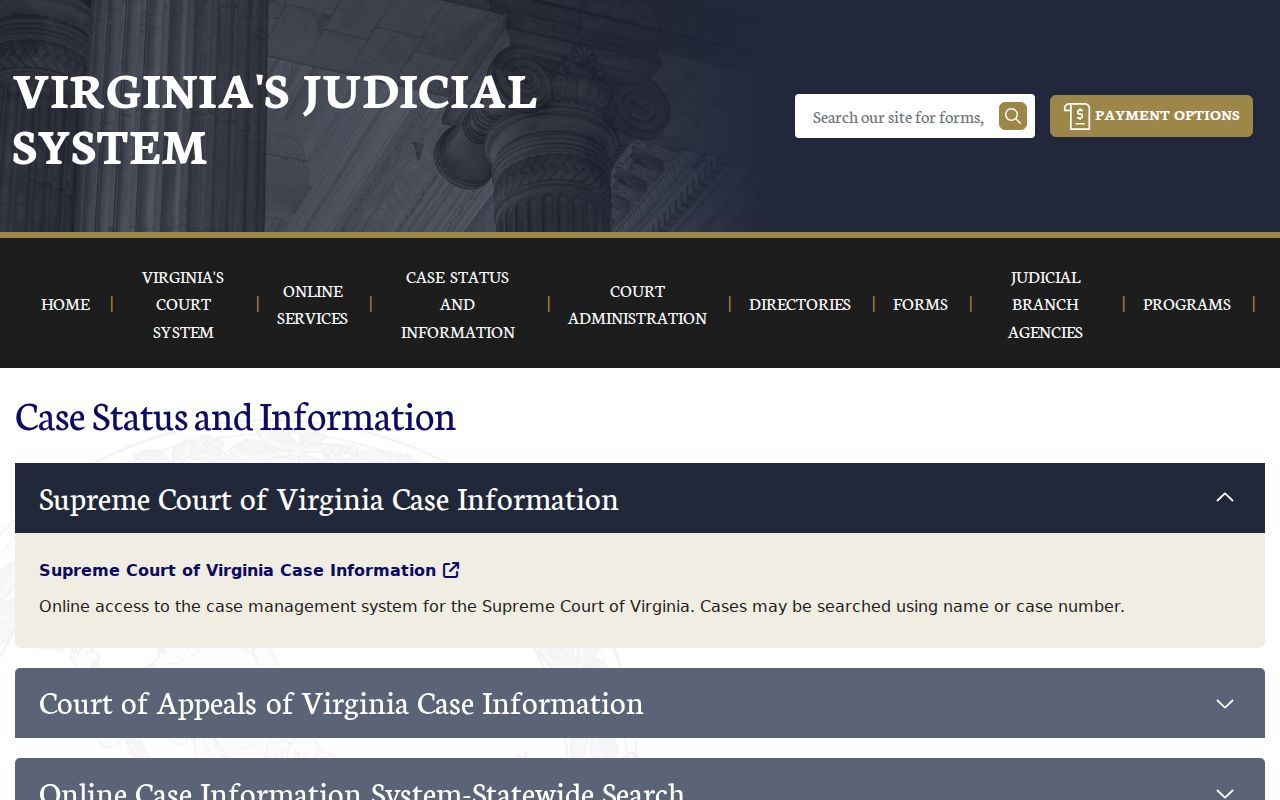
Virginia Case Status and Information offers name, case-number, and hearing-date search modes for many General District cases. It also covers selected circuit cases. Pick the correct court and locality. Charlottesville Circuit, General District, and Juvenile and Domestic Relations courts have separate responsibilities. No universal public circuit-court search exists. Juvenile and domestic-relations information stays off the public online case-information route.
A docket result can show a party name, case number, case type, filing or hearing date, action description, and status or disposition. It does not verify present residence. Use the case number with the clerk to request an underlying public file. Do not infer guilt from an accusation. Do not copy information from sealed, expunged, juvenile, or protected matters.
Charlottesville Vital Records Follow Age Rules
Virginia Department of Health indexes are useful for an event lead. Current certificates are not an open name-search resource. Under Va. Code § 32.1-271, birth records become public after 100 years. Death, marriage, and divorce records become public after 25 years. Statewide indexes cover births and deaths from 1912, divorces from 1918, and marriages from 1936. Certified copies today are generally limited to immediate family or other qualified people with identification.
The Office of Vital Records offers online, mail, and walk-in channels. Local health districts can provide a practical certificate counter. The current fee identified by VDH is $15 per certificate or search. For adoption questions, use Virginia DSS Adoption Disclosure or the confidential Birth Father Registry. Do not try to locate a sealed file through ordinary public records.
Charlottesville Records Requests Fill Gaps
Need a record the city has not posted online? The Charlottesville FOIA request route covers those gaps. Requests can go in online, in person, by mail, or by fax to 434-970-3890. Be specific. Name a record type, a date range, an address, a permit number, or a department instead of asking broadly about a person or place. Narrow requests move faster. The City Attorney's Office coordinates all city FOIA work.
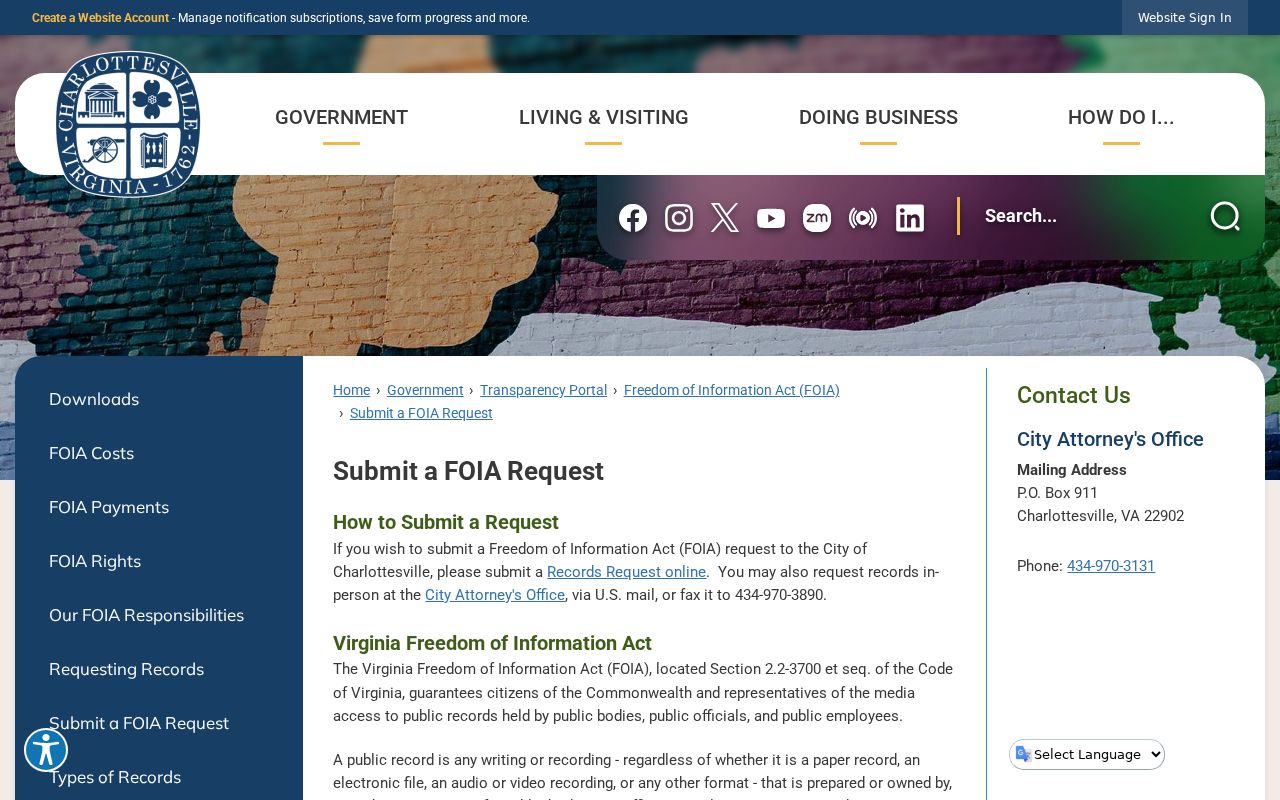
The Virginia Freedom of Information Act, Va. Code § 2.2-3704, calls for a response within five working days. That answer may be records. It may be a cited withholding, a no-record reply, or notice that a prompt answer is impracticable. The law does not require an office to create a new record. It also does not require release of information protected by an exemption.
Charlottesville Council Archives Add Names
Charlottesville's Council archive is a local records story, not a resident roll. A 2022 imaging project put more than 8,000 pages of City Council minutes and ordinance books online. The set includes minutes back to 1854. It also includes ordinances from 1904. Public business may identify officials, petitioners, committee participants, street actions, and property decisions. It can give a name historical context. It does not establish that the person lived at a particular address.
For a historical address, compare council records with deeds, directories, and map evidence. That combination is especially useful when a street name changed. It also helps when annexation or redevelopment altered a neighborhood.
Charlottesville Custody Records Are Limited
The Albemarle-Charlottesville Regional Jail Records Department directs public inmate searching to Virginia VINE. It publishes no local roster on its records page. Its weekday records desk can answer process questions, while court clerks control the underlying orders. Custody information is a narrow status lead. It is never a full legal history. It is never a substitute for reading a public court record.
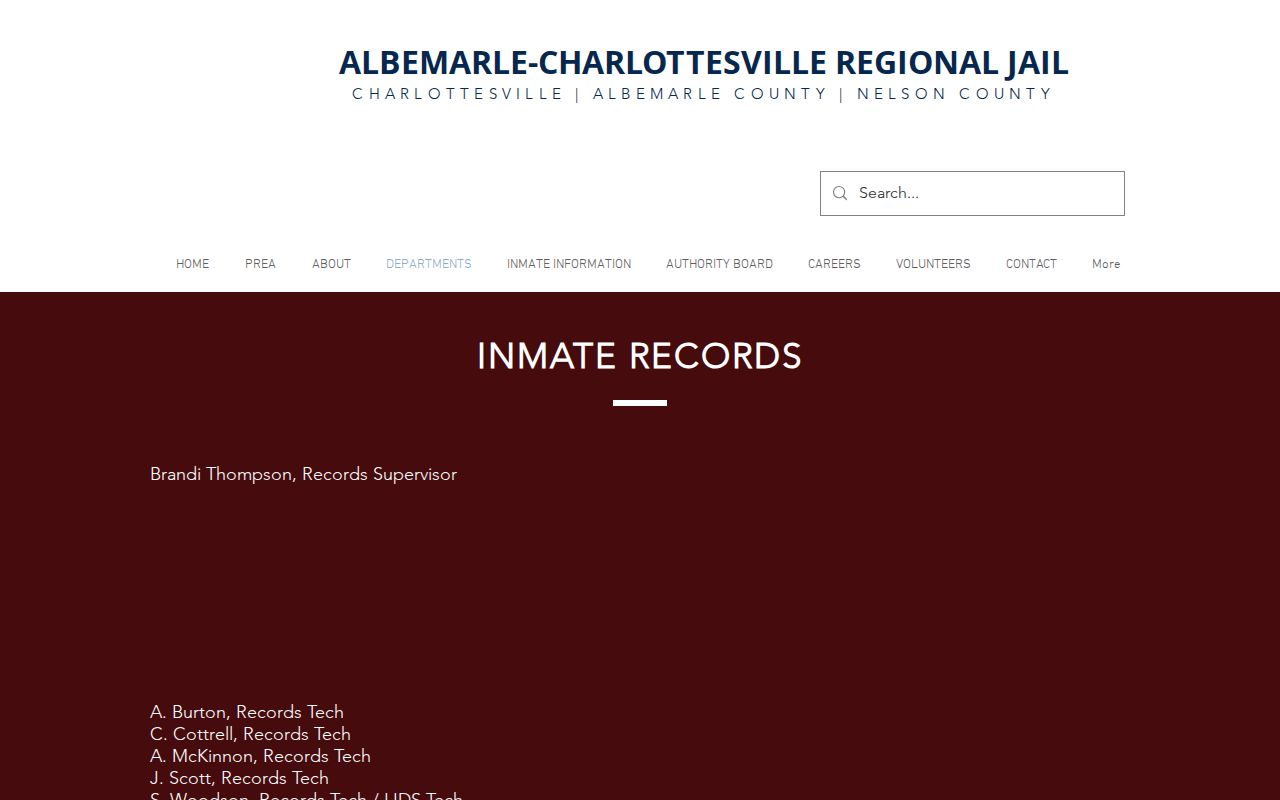
Virginia VINE lets you search for someone in custody and sign up for status notifications. Charlottesville users should treat its results as an information service, though. The system does not prove guilt, confirm where a person lives, or settle the final terms of a court order.
Charlottesville Name Leads Beyond Local Offices
The Virginia Treasury runs a free statewide search for unclaimed property. It works best once you already have a person or family name in hand. A match is only a claim lead, though, never proof of where someone lives. The official service states that claims go through VaMoneySearch. Mail or email follow-up is available when needed. Hang up on any caller demanding an upfront fee to release a claim. The Virginia Treasury unclaimed-property page lays out the official process. It also points to the free search.
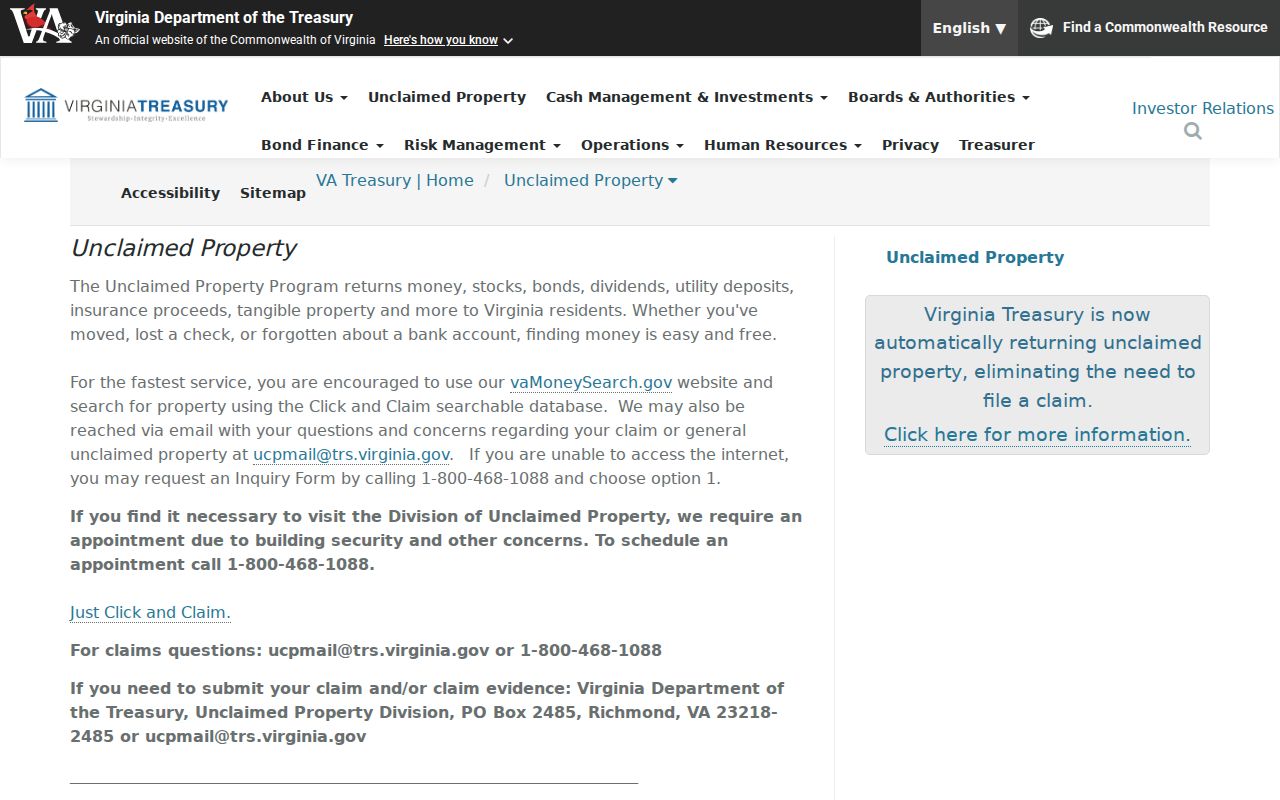
Verify identity with a separate official record before filing anything. A genuine match may just share a surname or lean on an old address.
Limits on Charlottesville Resident Records
Open records still have privacy edges. An owner field names one holder, not every soul in a household. A tax mailing address might point to a business office or another state entirely. Virginia shields sensitive voter details. It also lets qualifying Address Confidentiality Program participants use a designated address instead. Vital certificates follow age and eligibility rules. Juvenile, sealed, expunged, adoption, and protected court material stays restricted.
Spot an error in a public entry? Go straight to the office that created it. The assessor sorts out parcel data, the registrar takes voter corrections, the clerk handles case and land-record questions, and VDH fixes vital-record errors.
Historic Charlottesville Resident Directories
Charlottesville's printed directory trail starts with known 1895 and 1898 editions. A microfilm run then stretches from 1904/05 to 1960, with documented gaps along the way. JMRL holds the 1898 Charlottesville City Directory as a local-history document. UVA preserves a 1934 Hill's Charlottesville and Albemarle volume. NARA identifies 1929, 1931, and 1934 microfilm volumes. These are dated snapshots, so they prove neither title nor current occupancy.
A reverse, or criss-cross, directory flips the order. Streets and numbers come first, surnames second. That layout can pin a household to a printed street number. The name section may then add a spouse, an occupation, or a telephone clue when the edition includes one. The full collection trail sits on one page. The gaps are covered there too. So is how to read each volume. It is all on the Charlottesville city directory page.
The Library of Virginia's Charlottesville microfilm catalog offers another historical access channel. It lists city administrative, court, land, marriage, vital, and will material dating back to the city's formation. Many reels are marked for interlibrary loan. Read the catalog as an access map. It is not a promise that every listed page has been digitized.