
Charlottesville Resident Lookup Records
Pick the record that fits the question. Charlottesville is an independent city. It sits separate from Albemarle County, even though the county surrounds it and many Albemarle addresses carry a Charlottesville mailing line. A city parcel, an Albemarle parcel, and a University of Virginia area exception can each point to a different custodian. Start with the City GIS Viewer or the City Assessor for a present property connection. For a public legal matter, choose the court where the case was actually filed. A vital index identifies an event. A certified copy of a current certificate follows separate eligibility rules.
| Record | What It Can Confirm | Charlottesville Custodian | Access Route |
|---|---|---|---|
| City parcel and assessment file | Recorded owner, physical parcel address called situs, deed or plat-map reference, sale context | City GIS and City Assessor | Free web map; assessor history files by appointment |
| Recorded land document | Transfer parties, date, legal description that identifies the tract, consideration, prior reference | Charlottesville Circuit Court Clerk | Virginia Secure Remote Access or US Land Records where available; clerk counter fallback |
| Voter registration | A person's own status, polling place, and districts; limited public-list fields | Virginia Elections and Charlottesville registrar | Secure individual portal or local-office request under election rules |
| Court index | Party name, case number, case type, dates, and disposition | Charlottesville courts | Virginia case system, local portal, or clerk counter |
| Vital-record index | Birth, death, marriage, or divorce event trail | Virginia Department of Health | Public age rules apply; current copies require eligibility and identification |
| Professional credential | Credential name, status, type, number, and applicable discipline data | Virginia DPOR or DHP | Free official lookup; it does not prove a home address |
A common name makes a Charlottesville resident lookup harder. Start from the least ambiguous detail already in hand. A nine-digit parcel ID or a full property address beats a surname alone. The assessor asks callers for an owner name, physical address, or parcel number. The office also keeps hard-copy history files with ownership details, deed and plat references, and building information. One caution applies. A mailing address in tax material is only a locating clue. It does not prove that the owner lives at the parcel.
Note: City and Albemarle records sit in separate offices. Confirm the parcel locality before treating a Charlottesville mailing address as a city record.
Charlottesville Resident Court Search
Charlottesville belongs to Virginia's 16th Judicial District. The Charlottesville Circuit Court holds broad civil matters, felony cases, appeals, divorce matters, land records, wills, and fiduciary files. The General District Court handles civil, criminal, and traffic dockets. Juvenile and Domestic Relations District Court keeps a separate confidential jurisdiction, and its case information never appears in the public online system. Albemarle runs parallel courts, so a name search should follow the filing locality rather than the postal city.
The Circuit Court Clerk sits at 315 East High Street, Charlottesville, VA 22902, open 8:30 a.m. to 4:30 p.m., phone 434-970-3766. Once the index yields a case number, give the clerk that number with the party name and ask about an inspectable file, archived material, or copies. Request a specific document, such as a final order, probate inventory, or judgment. Local copy and certification prices are not published, so confirm them with the clerk before ordering.
Charlottesville Resident Case Fields
The Virginia Case Status and Information system serves a Charlottesville resident lookup well only when its scope fits the case. Select Charlottesville, not Albemarle, for a local search. General District instructions suggest entering the last, first, and middle name exactly as it appears on the summons or warrant. An exact case number is the narrowest route in. Hearing-date search works where the locality supports it. No statewide public circuit-court search covers every circuit, and a negative statewide result is a reason to call the local clerk rather than a conclusion about a person.
| Portal field | Documented use |
|---|---|
| Court or locality | Select Charlottesville for city cases; statewide and selected-court coverage varies. |
| Name | Use last, first, and middle name when that search mode is selected. |
| Case number | Use the exact number when available. |
| Hearing date | Search by locality and date where supported. |
| Case category | Scope can differ for circuit civil or criminal and General District civil, criminal, or traffic matters. |
The official case-search page shows the available name, case-number, and hearing-date paths.
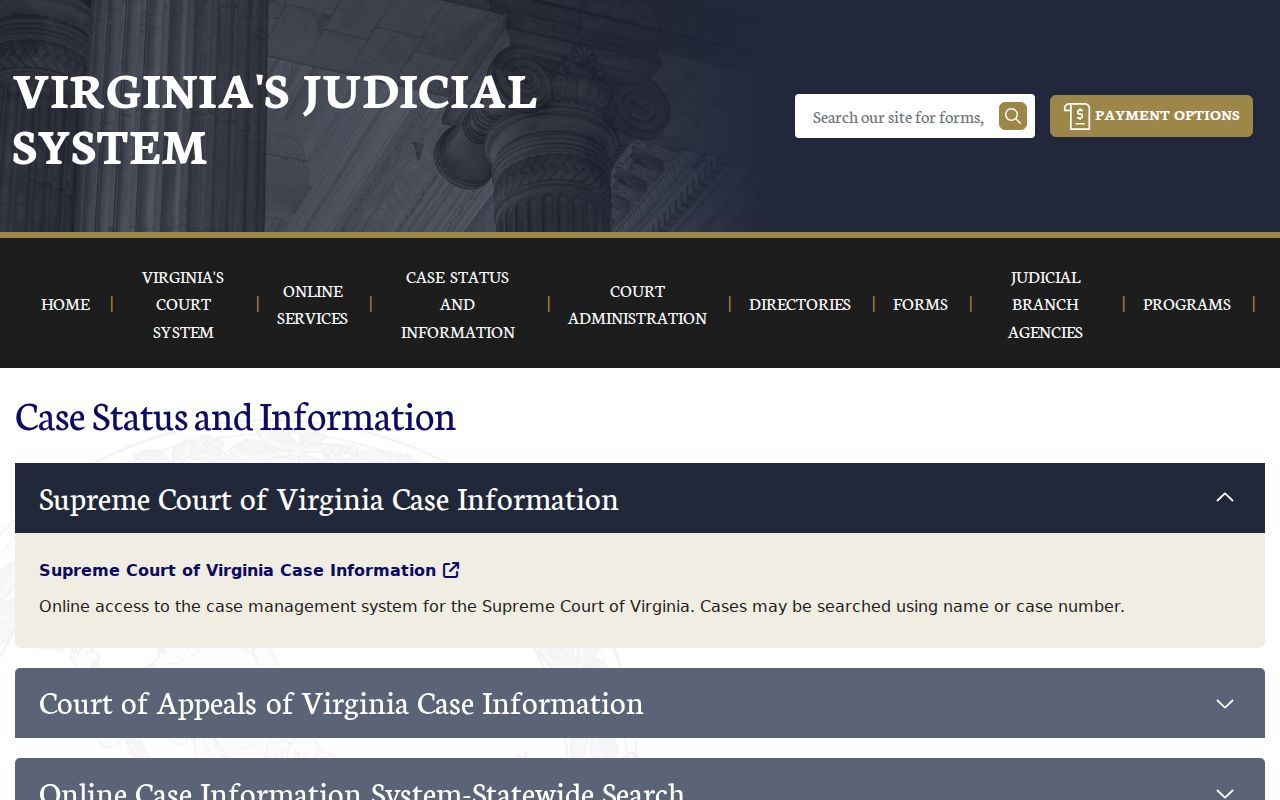
A result may list locality, party name, case number, category, filing or hearing date, action description, status, disposition, and an eligible payment action. It does not promise an address or a full document image. Juvenile, sealed, expunged, adoption, and protected family material may not appear in a public result.
Verify a Charlottesville Resident Carefully
A careful Charlottesville resident lookup joins records without assuming one name equals one person. Where lawfully visible, compare three independent details. Use spelling or initials, an approximate birth year, or a relative. A historical address, a parcel description, an attorney, or a court locality can also help. Virginia Memory's name-normalization advice helps here. Punctuation may vanish. Abbreviated first names may expand. Aliases can sit in parentheses, and two-word surnames may be joined or split. Keep names separate until the evidence supports a match.
- Anchor the name to a city or county parcel, recorded deed, or another exact address clue. Record whether the address is the parcel situs or a mailing address.
- Search the correct court locality with the name variants. Preserve the case number, category, and dates rather than relying on a name-only result.
- Check the public vital-record index or genealogy material for an event that fits the person and timeframe. Do not treat a current certificate as an open record.
- Request a public underlying document from its custodian when the index leaves a real question unanswered. Use the clerk, assessor, local registrar, or VDH channel that actually maintains it.
- Docket
- A court's running case record, usually organized around a case number, events, hearings, and orders.
- Index versus image
- An index is a searchable list of record details. An image is the scanned document itself and may have separate access rules or charges.
- Certified copy
- A copy issued and authenticated by the record custodian for a purpose that requires the office's certification.
- Disposition
- The recorded outcome or present status of a court matter, which must not be confused with a person's current residence.
When the address itself becomes the question, the Charlottesville street directory offers the address-keyed property and map workflow instead of forcing a name search into a street-wide list.
Charlottesville Resident Vital Records
Virginia keeps its vital records in one statewide office. The Virginia Department of Health Office of Vital Records holds Charlottesville birth, death, marriage, and divorce records. It handles online and mail orders across the state. The Central Virginia Health District offers a local registrar channel and can sell Virginia certificates. Same-day pickup is generally available there in most cases. Ordering on paper means mailing an application to VDH's Office of Vital Records, PO Box 1000, Richmond, VA 23218-1000. VDH lists a $15 certificate or search fee on current pages. Published turnaround times vary, so use the live VDH estimate rather than a fixed promise.
A recent certificate is not an open record. Only qualified applicants with identification can receive one. A public index can still supply an event trail for verification purposes. That split matters for resident lookup work. The VDH vital-record forms page links the birth, death, and marriage or divorce applications. It also carries the related identification material.
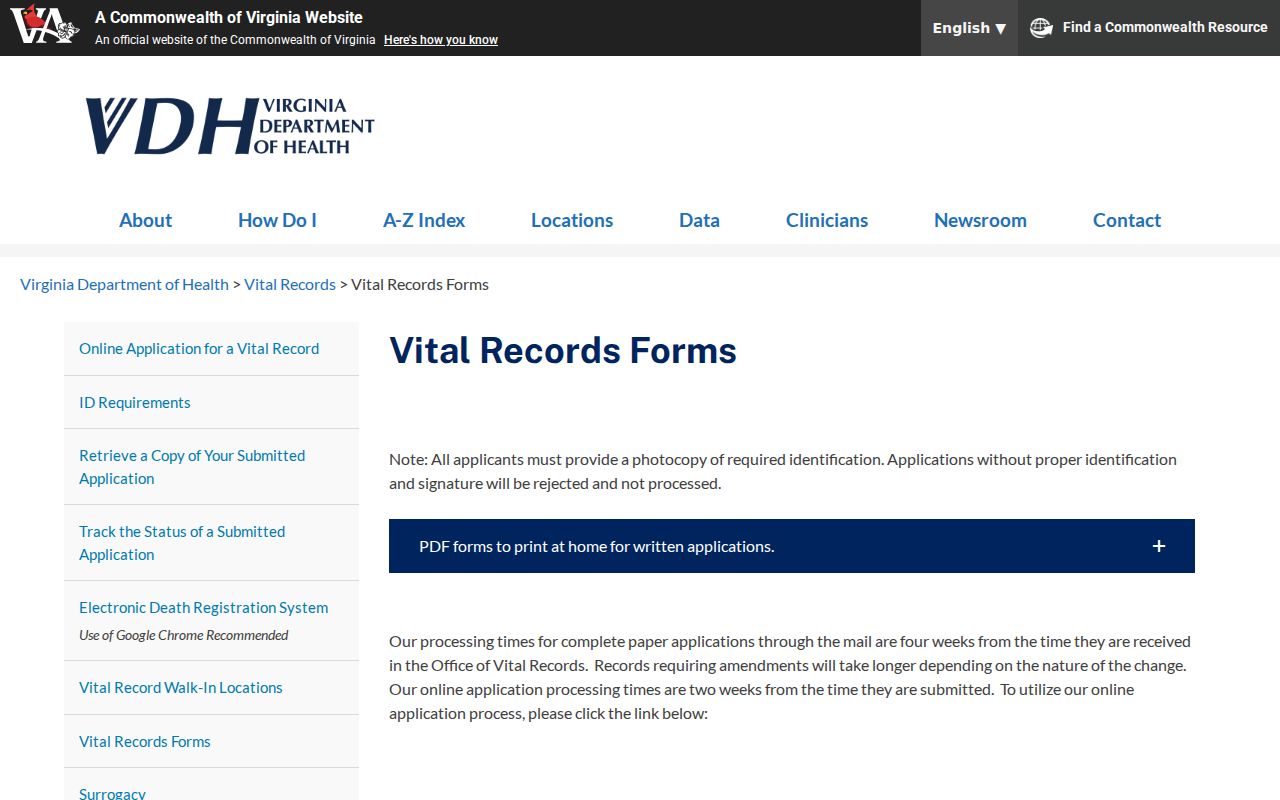
Older events call for a different route. VDH's public-age rules and the Library of Virginia microfilm catalog serve family history better than an application for a current certificate. Church registers, cemetery records, newspapers, and the ACHS family Bible collection can each supply a promising lead. Check any lead against the official record.
Charlottesville's 100 and 25-Year Rules
Virginia sets numeric thresholds for vital records. A birth record goes public after 100 years. Death, marriage, and divorce records become public after 25 years under Va. Code § 32.1-271. The age rule and index coverage do not match. An index entry can appear while the current certificate still requires an eligible applicant and identification.
| Record | Public point | Documented statewide index run |
|---|---|---|
| Birth | 100 years after the event | 1912 to present |
| Death | 25 years after the event | 1912 to present |
| Marriage | 25 years after the event | 1936 to present |
| Divorce | 25 years after the event | 1918 to present |
Older events start in one place. A divorce decree is not there. The clerk keeps the separate court-file trail, and the VDH genealogy resource explains the public-age rules and index years for an older Charlottesville family event.
Charlottesville Resident Voter Limits
A Charlottesville resident can check personal voter details through the Virginia Citizen Portal. The secure service covers a voter's own registration, polling place, districts, absentee status, and voting history. First name, last name, date of birth, the last four Social Security digits, locality, and an attestation are required. Pick Charlottesville City rather than Albemarle County. It is not a residents directory, though, and it will not list every person on a street or in a ZIP code.
Virginia Code § 24.2-444 limits what a registration list may show. Permitted fields include name, address, year of birth, gender, and election districts. Social Security data, day and month of birth, protected residences, and other sensitive details stay out. For corrections or questions about an allowable public list, contact Charlottesville Voter Registration & Elections at City Hall Annex, 120 7th Street NE, Room 142, Charlottesville, VA 22902, phone 434-970-3250, Monday through Friday, 8:30 a.m. to 4:30 p.m.
The Citizen Portal entry page shows the secure registration, status, polling-place, absentee, and voting-history options.
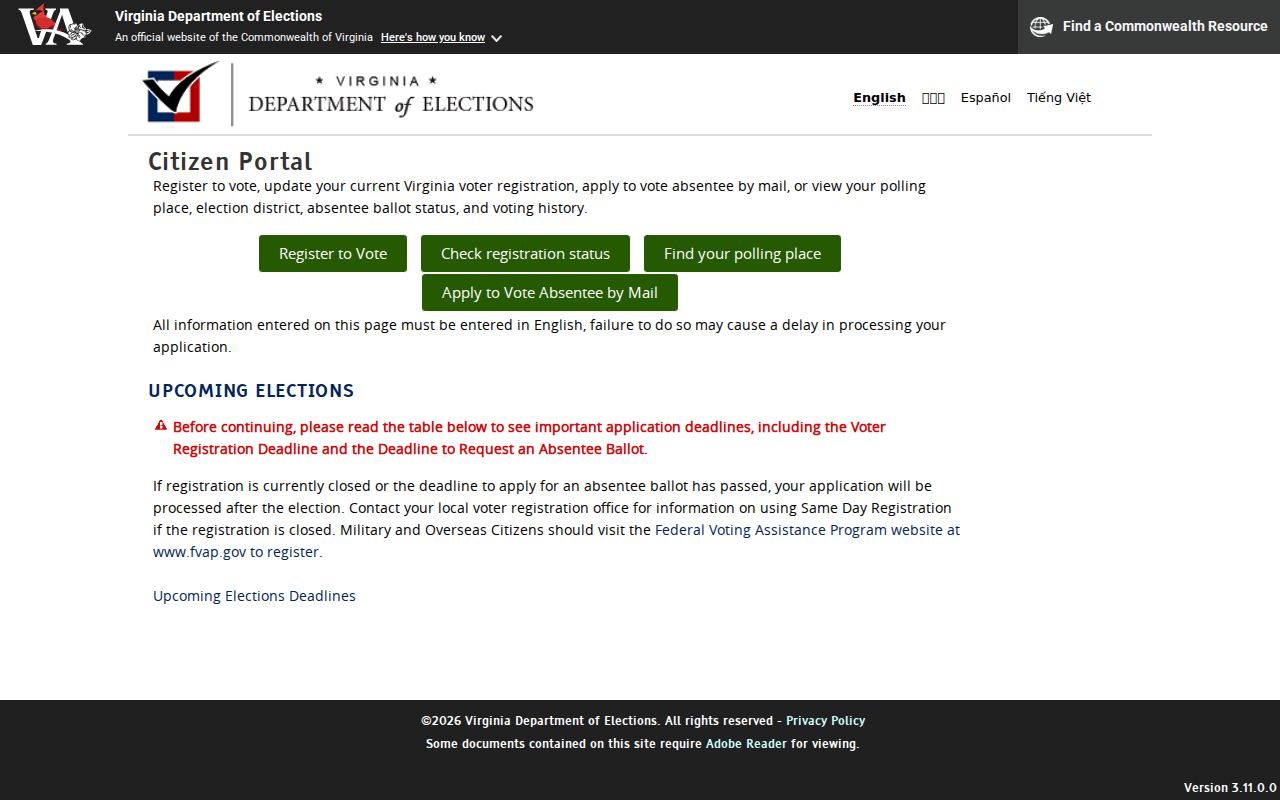
A failed match can stem from an entry error, a locality mismatch, or a protected record. That is not proof of no Charlottesville tie.
Charlottesville Resident Lookup Special Routes
Narrow questions call for narrow official routes. Probate, the court process for an estate, can identify a decedent, executor, heirs, and public property references. The Circuit Clerk or commissioner of accounts keeps it. A former classmate search works better with directory volumes, yearbooks, and historical newspapers than a current record. Adoption has its own path. The Virginia DSS Adoption Disclosure program serves qualified adult adoptees, adoptive parents, birth parents, and adult birth siblings. It sets its own rules for identifying and non-identifying information.
Credentials sit on yet another track. The Virginia DPOR License Lookup searches a credential by name, license number, address, or license type. It confirms a credential or public status, not a residence. Online data can lag from processing or maintenance. Report a discrepancy to DPOR. A screen result is not the public record, and the DPOR search screen documents the name, license, address, and license-type paths for a credential check.
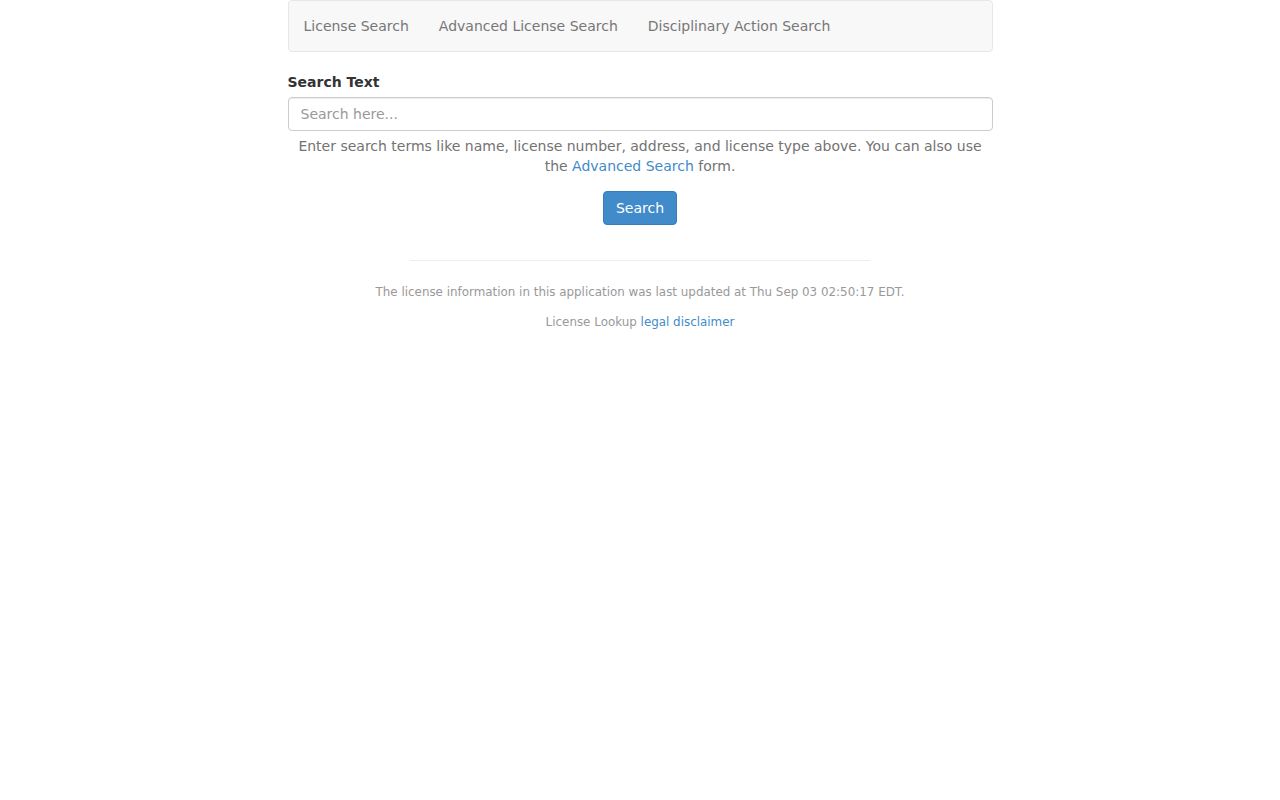
A business filing or credential can add a name or affiliation to a record trail. It is not proof of residence.
Charlottesville Resident Lookup Privacy
Virginia's access rules depend on the record type. Vital records follow the 100-year and 25-year thresholds. Court material can be juvenile, sealed, expunged, adoption-related, or otherwise protected. Public voter lists omit sensitive fields. Virginia's Address Confidentiality Program, under Va. Code § 2.2-515.2, gives eligible participants a designated-address and mail-forwarding protection. Protected voters may use a post-office-box address in public registration material under Va. Code § 24.2-418. A missing result can be a deliberate safeguard, not proof that the person is absent.
Corrections go to the custodian that created the record. The assessor handles a parcel issue, the registrar a voter correction, and the court clerk a docket or file concern. VDH corrects certificates. SCC or DPOR handles entity and license data. Each office can explain its correction process and the evidence it needs.
Charlottesville Resident Record Requests
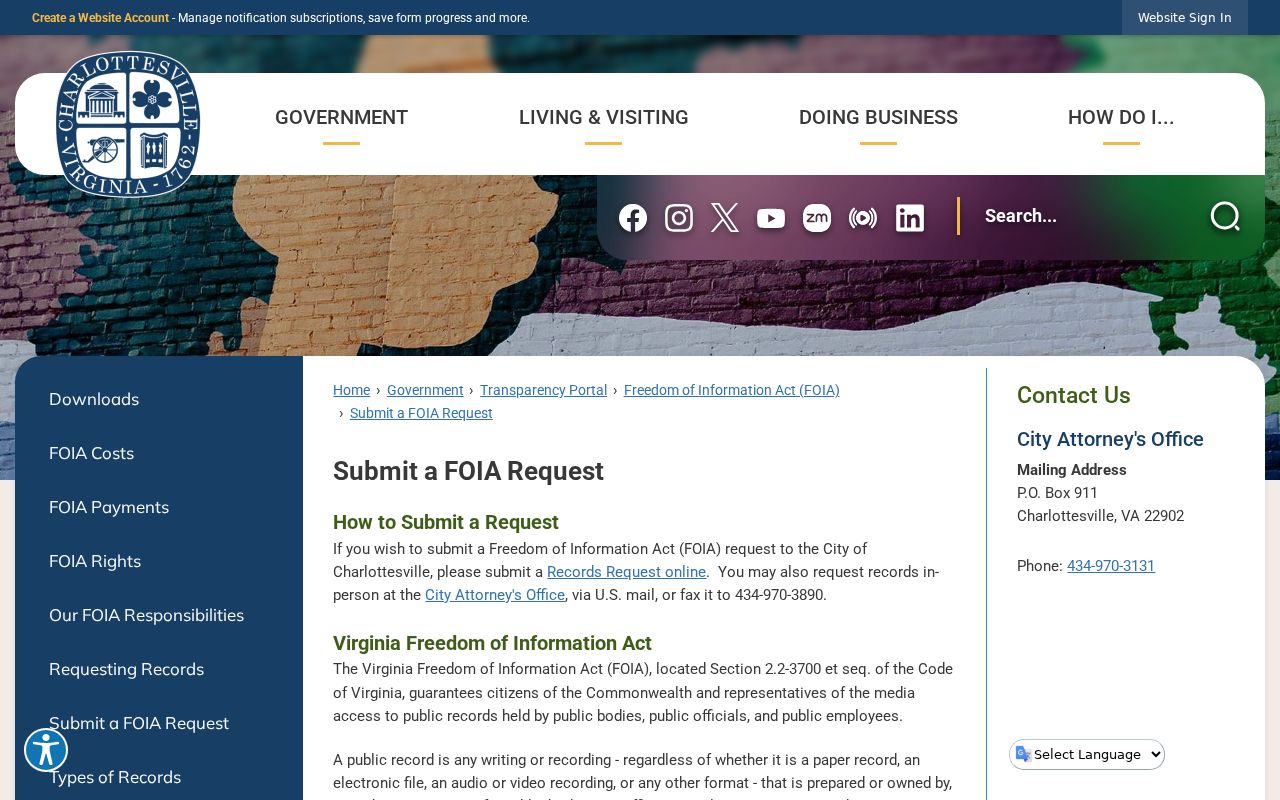
Some records never make it onto a public portal. Virginia gives you a backup: the Freedom of Information Act. A focused FOIA request can reach them. These nonexempt records stay hidden from a search of the Charlottesville residents directory or the City's databases.
Charlottesville takes requests four ways. Use the online form, stop by in person, send mail, or fax 434-970-3890. Whatever the channel, be specific about the existing record you want. Name the date range, the likely office, and the exact document. Vague asks slow things down for everyone.
Know the limits before you file. FOIA never forces the City to invent a new record. It also protects exempt material from release. The City usually answers within five working days. The reply brings records, a cited exemption, a no-record notice, or a notice that filling the request is impracticable. The City's FOIA request page lays out every submission channel.
Precision pays off in FOIA work. A narrow, well-described request lets records staff pull the right file fast. It also spares you a wait. The wrong custodian puzzles over a question that belongs elsewhere in the City. Think of it like a resident lookup. The more exact the details, the cleaner the result from the records office.
Note: Ask for a real record held by a real custodian, not a brand-new profile the City would have to assemble.